
A phobia is more than just fear—it’s an intense, persistent reaction that can limit your daily life. Access clinical-grade care designed to help you face and overcome your fears safely.
Most people avoid their fears—but avoidance strengthens phobias over time. We offer structured, evidence-based care that addresses the root cause.
Work with experts trained in anxiety disorders, including social phobia and specific phobias.
Tailored interventions like CBT and exposure therapy designed for your unique phobia triggers.
Monitor your anxiety levels and responses to treatment in real-time for continuous improvement.
Work with experts trained in anxiety disorders, including social phobia and specific phobias.
Tailored interventions like CBT and exposure therapy designed for your unique phobia triggers.
Monitor your anxiety levels and responses to treatment in real-time for continuous improvement.
The phobia meaning refers to an excessive and irrational fear of a specific object, situation, or activity that poses little to no real danger. The phobia definition highlights it as a type of anxiety disorder characterised by avoidance and distress.
Understanding the phobia definition is important—this isn’t just fear; it’s a condition that can interfere with your ability to function.
There are several types of phobias, each affecting individuals differently:
A comprehensive phobias list or list of phobias includes hundreds of specific fears, from common to rare.
Untreated phobias can affect every aspect of your life

Constant worry,
low confidence, and increased social anxiety.

Chronic stress,
fatigue, and
sleep”disturbances

Avoidance of
work, travel, or relationships
Constant worry,
low confidence, and increased social anxiety.
Chronic stress,
fatigue, and
sleep”disturbances
Avoidance of
work, travel, or relationships
If your fear is controlling your decisions, it’s time to seek help.
A phobia becomes clinically significant when:
If your fear is controlling your decisions, it’s time to seek help.
How It Works
Complete a detailed screening to identify your types of phobia and severity.
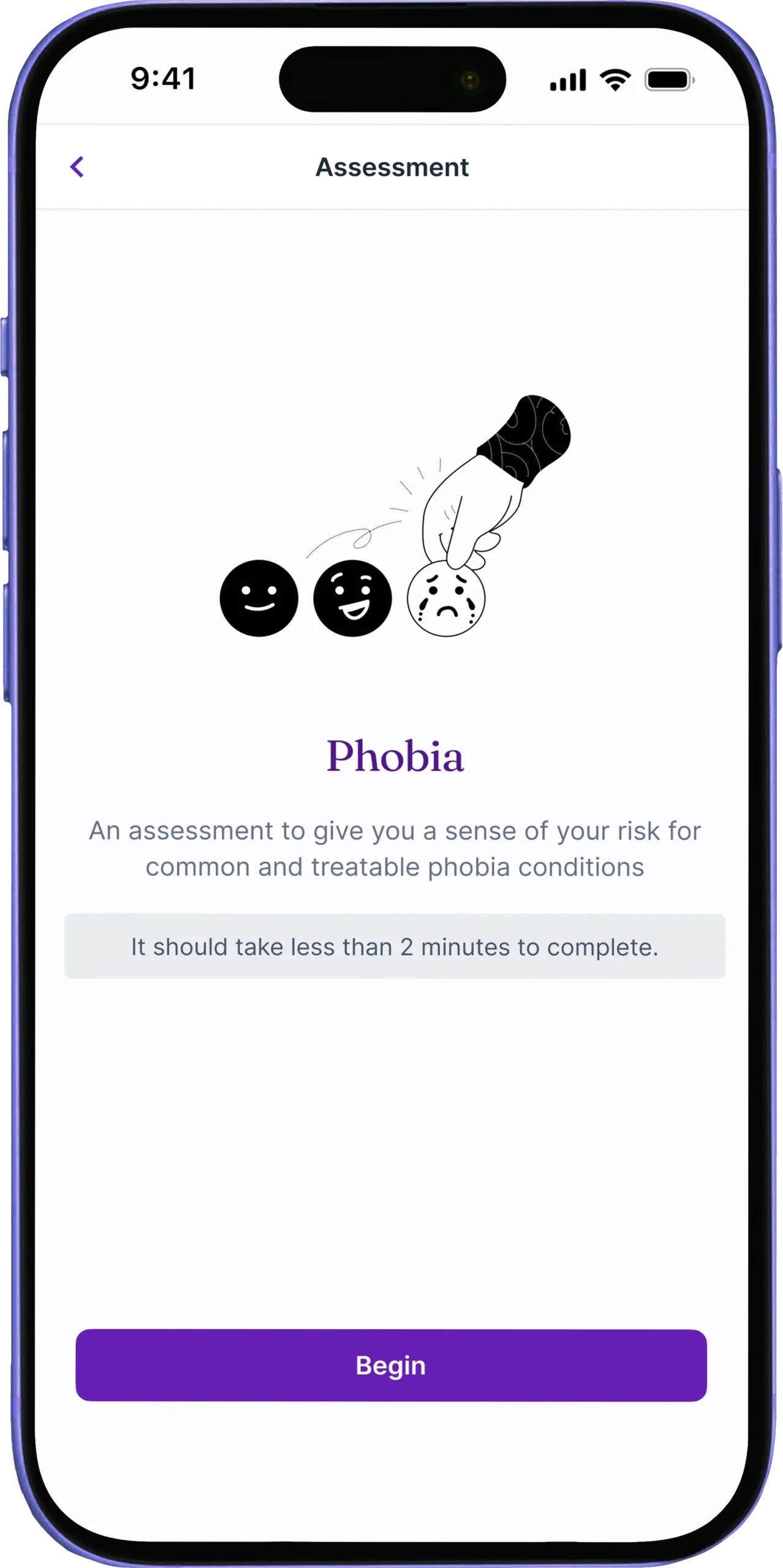
Meet a specialist to understand your triggers and patterns.
Receive a structured roadmap using therapy techniques like CBT and exposure therapy.
Track your improvement and adjust your care plan as needed.
Fear is a normal response to danger, while a phobia is excessive, persistent, and irrational
Yes. Evidence-based treatments like CBT and exposure therapy are highly effective for treating phobias.
A professional assessment helps identify your condition from the broader list of phobias.
Yes, millions of people experience different types of phobia, but many don’t seek treatment.