
A panic attack is an overwhelming physical experience, but it doesn’t have to control your future. Partner with clinical experts to build a science-backed care plan that stops the cycle of panic.
Panic Disorder requires more than just “deep breathing.” We provide a high-precision medical approach to de-escalate your nervous system.
We match you with clinicians who are experts in Exposure Therapy and Panic-Focused CBT.
Your plan integrates immediate biological grounding techniques with long-term cognitive retraining and medication management if needed.
Our platform allows you to log attacks in real-time, giving your care team the data they need to adjust your treatment instantly.
We match you with clinicians who are experts in Exposure Therapy and Panic-Focused CBT.
Your plan integrates immediate biological grounding techniques with long-term cognitive retraining and medication management if needed.
Our platform allows you to log attacks in real-time, giving your care team the data they need to adjust your treatment instantly.
Panic Disorder occurs when the body’s “emergency response” triggers without a real threat. It isn’t just a high level of anxiety; it is characterized by sudden, intense waves of fear that reach a peak within minutes.
A panic attack is a total physiological takeover.

Intense fear of dying, “going crazy,” or losing control. You may feel a sense of unreality (detachment from your body).

Racing heart (palpitations), shortness of breath, chest pain, trembling, sweating, and chills or hot flashes.
Intense fear of dying, “going crazy,” or losing control. You may feel a sense of unreality (detachment from your body).
Racing heart (palpitations), shortness of breath, chest pain, trembling, sweating, and chills or hot flashes.
Panic is a physical sensation, not a physical danger. Our medical experts are here to help you prove that to your nervous system.
Panic attacks are common, but panic disorder is defined by the persistent fear of having more attacks. It becomes severe when your life begins to shrink to avoid the panic.
Red Flags of Severe Panic Disorder:
Panic is a physical sensation, not a physical danger. Our medical experts are here to help you prove that to your nervous system.
How It Works
Complete a clinical screening (PDSS) to map the frequency and intensity of your attacks.
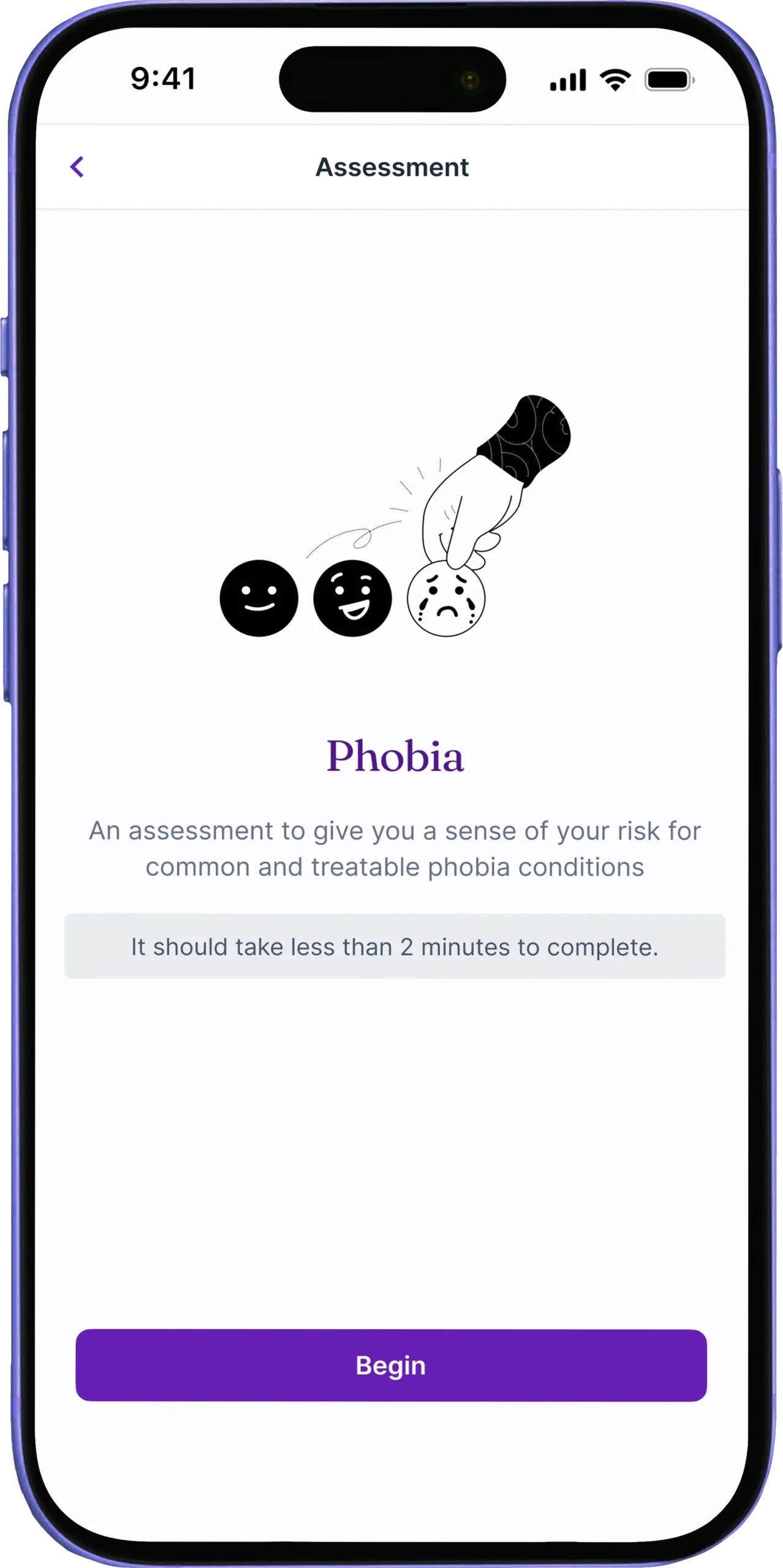
Meet with a specialist to rule out underlying physical conditions and identify your specific triggers.
Receive a plan that integrates CBT, breathing re-training, and—if necessary, short or long-term medication to stabilize your system.
Use our app to “log an attack.” Your clinician reviews these logs to find patterns and provide specific tools for your next encounter.
No. While it feels like a heart attack, a panic attack is a surge of adrenaline. Our medical team will help you understand the difference between a cardiac event and a sympathetic nervous system surge.
Not necessarily. Medication can be used as a “safety net” to lower the baseline of your anxiety while you learn the therapeutic skills to stop an attack on your own.
We focus specifically on the physical symptoms and the fear of the fear, using specialized protocols like Exposure Therapy that general talk therapy often misses.