
Anxiety isn’t just “worrying”; it’s a physical and mental burden. Our online anxiety treatment program pairs you with licensed medical experts to build a clinical-grade care plan designed to help you breathe easier and live fully.
Most people try to manage anxiety alone. We provide a structured, medical approach that combines the science of the brain with the compassion of human care.
We pair you with providers specializing in GAD, Panic Disorder, and Social Anxiety. Our anxiety specialists are licensed clinicians trained in CBT, exposure therapy, and medication management, so you’re matched with the right expert from day one.
From therapeutic techniques to medication management (if needed), data backs every part of your plan. Every anxiety treatment plan combines therapy, optional medication, and progress tracking — never a generic template.
We don’t wait for your next appointment; our platform monitors your progress to intervene when you need it most. Unlike traditional therapy, our system monitors symptoms between sessions, so your anxiety therapist can adjust your plan in real time.
We pair you with providers specializing in GAD, Panic Disorder, and Social Anxiety. Our anxiety specialists are licensed clinicians trained in CBT, exposure therapy, and medication management, so you’re matched with the right expert from day one.
From therapeutic techniques to medication management (if needed), data backs every part of your plan. Every anxiety treatment plan combines therapy, optional medication, and progress tracking — never a generic template.
We don’t wait for your next appointment; our platform monitors your progress to intervene when you need it most. Unlike traditional therapy, our system monitors symptoms between sessions, so your anxiety therapist can adjust your plan in real time.
Anxiety is your body’s “false alarm” system. While stress is a temporary response to an external threat, anxiety is a persistent feeling of apprehension that lingers even when the threat is gone. It is a biological survival mechanism — the “fight or flight” response — that has become stuck in the “on” position. Anxiety is driven by the amygdala, the brain’s emotional centre. Understanding what causes anxiety helps you and your provider choose the right treatment. Our goal is to help you “retrain” your nervous system to recognise safety through evidence-based interventions like Cognitive Behavioural Therapy (CBT) and medical oversight.
Anxiety isn’t just “in your head”; it is a systemic experience that impacts every part of your daily functioning.

People experiencing anxiety often notice racing thoughts, persistent “brain fog,” irritability, and constant catastrophizing — always expecting the worst-case scenario.

Physical anxiety symptoms commonly include muscle tension (especially in the neck and shoulders), heart palpitations, disrupted sleep cycles, and chronic digestive issues.
People experiencing anxiety often notice racing thoughts, persistent “brain fog,” irritability, and constant catastrophizing — always expecting the worst-case scenario.
Physical anxiety symptoms commonly include muscle tension (especially in the neck and shoulders), heart palpitations, disrupted sleep cycles, and chronic digestive issues.
If your symptoms feel unmanageable, you don’t have to wait for them to get worse. Our medical experts are trained to step in at any stage of the spectrum to provide a stable path forward.
It can be difficult to distinguish between “normal” worry and a clinical condition that requires medical intervention. Anxiety is generally categorised as severe when it shifts from a feeling to a functional impairment.
Red Flags of Severe Anxiety:
If your symptoms feel unmanageable, you don’t have to wait for them to get worse. Our medical experts are trained to step in at any stage of the spectrum to provide a stable path forward.
Generalized Anxiety Disorder is marked by persistent, excessive worry about everyday situations — work, health, finances, relationships — that is difficult to control. Common symptoms include restlessness, fatigue, muscle tension, and difficulty concentrating. Our providers use CBT and, where appropriate, medication management to help you regain a sense of control.
Panic Disorder involves recurring, unexpected panic attacks: sudden surges of intense fear accompanied by a racing heart, shortness of breath, dizziness, or a sense of impending doom. Many people also develop a fear of future attacks, which can lead to avoidance of certain places or situations. Treatment typically combines therapy with strategies to reduce attack frequency and intensity.
Social Anxiety Disorder is an intense fear of being judged, embarrassed, or scrutinised in social or performance situations. It can lead to avoiding gatherings, meetings, or everyday interactions like phone calls. Our specialists use exposure-based CBT techniques to help you build confidence in social settings at a manageable pace.
Generalized Anxiety Disorder is marked by persistent, excessive worry about everyday situations — work, health, finances, relationships — that is difficult to control. Common symptoms include restlessness, fatigue, muscle tension, and difficulty concentrating. Our providers use CBT and, where appropriate, medication management to help you regain a sense of control.
Panic Disorder involves recurring, unexpected panic attacks: sudden surges of intense fear accompanied by a racing heart, shortness of breath, dizziness, or a sense of impending doom. Many people also develop a fear of future attacks, which can lead to avoidance of certain places or situations. Treatment typically combines therapy with strategies to reduce attack frequency and intensity.
Social Anxiety Disorder is an intense fear of being judged, embarrassed, or scrutinised in social or performance situations. It can lead to avoiding gatherings, meetings, or everyday interactions like phone calls. Our specialists use exposure-based CBT techniques to help you build confidence in social settings at a manageable pace.
How It Works
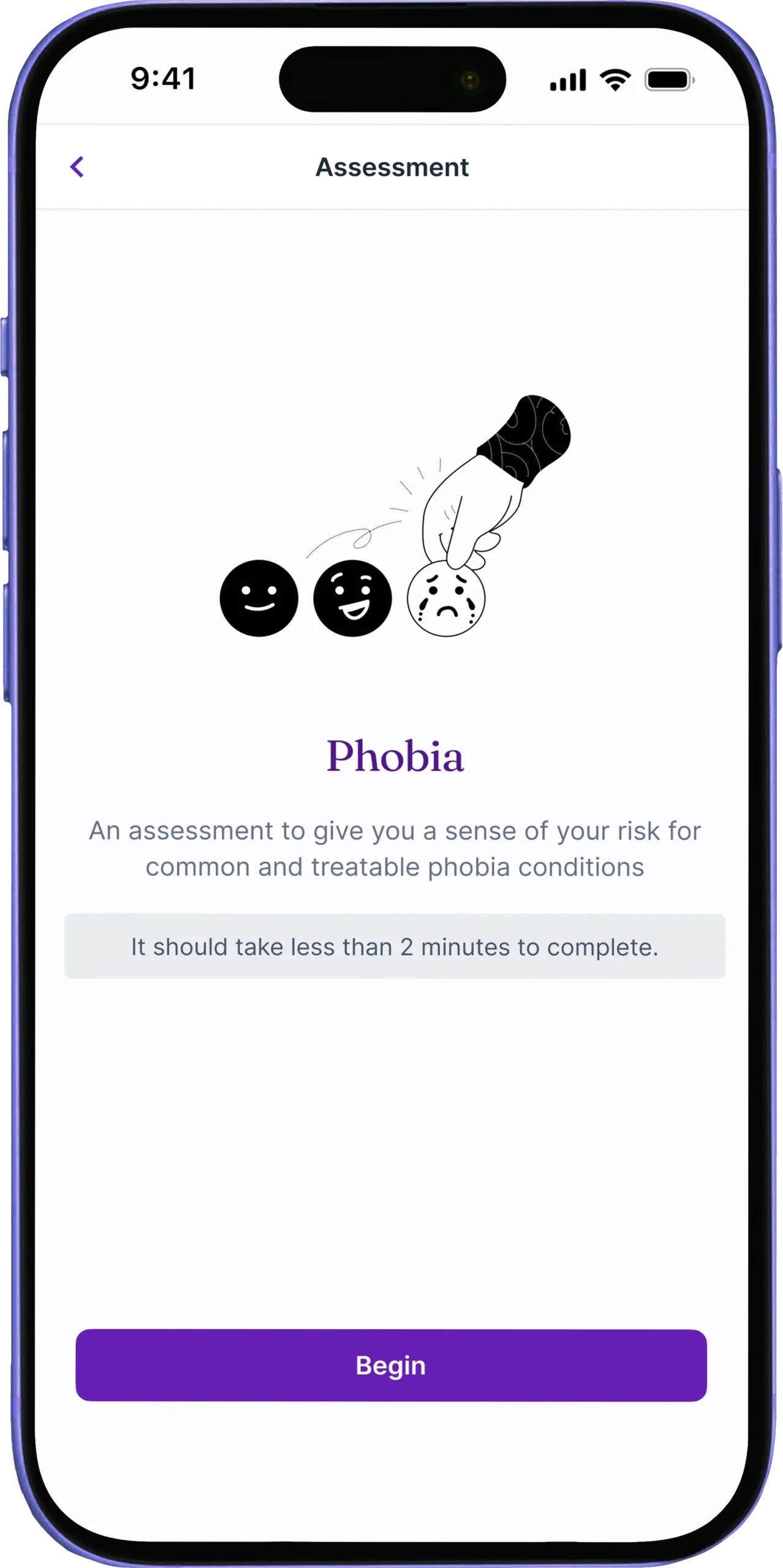
Complete a clinical assessment (GAD-7) to help our experts understand the severity and frequency of your symptoms.
Meet via video with a licensed professional to discuss your history, triggers, and lifestyle.
Receive your “Anxiety Roadmap,” which may include therapy sessions, mindfulness protocols, or prescription management.
Use our app to track your mood. If your anxiety spikes, your care team is alerted and can adjust your plan in real time.
There’s no minimum threshold of suffering required to seek support. A good rule of thumb: if anxiety is interfering with your work, relationships, sleep, or daily routine — or if you’ve noticed any of the red flags above lasting more than a few weeks — it’s worth talking to a specialist. Many people wait years before reaching out; getting an assessment early often means a shorter, simpler path to feeling better.
No. Medication is one tool among several, and it’s never required to start treatment. Many people manage anxiety successfully through therapy alone, particularly CBT. Your provider will discuss options with you and only recommend medication if it’s likely to meaningfully improve your outcome, and always with your input in the decision.
Most people complete their free assessment and are matched with a licensed specialist within a few days. Availability can vary depending on your specific needs (e.g., panic disorder vs. social anxiety) and time zone.
Coverage depends on your insurance provider and plan. Many plans include partial or full coverage for licensed therapy and psychiatric services; our team can help verify your benefits during onboarding.
Stress is typically a response to an external, identifiable pressure (a deadline, a conflict) and tends to ease once the situation resolves. Anxiety is a persistent sense of apprehension that can continue even when there’s no immediate threat, and it often shows up with physical symptoms like a racing heart or muscle tension. Ongoing stress can also contribute to the development of an anxiety disorder over time.