
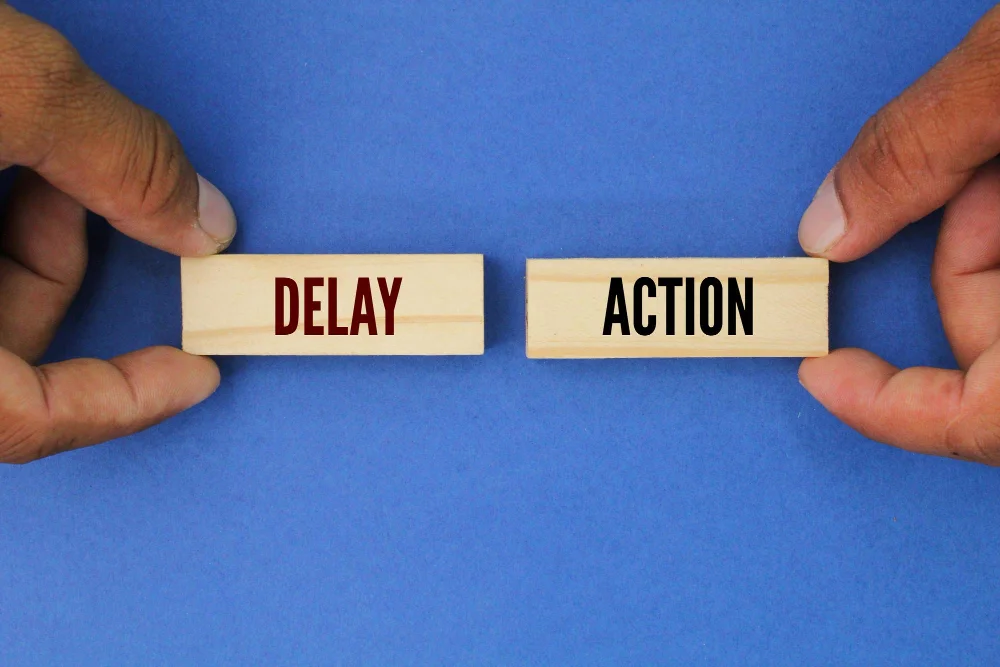
Introduction: The Readiness Illusion
Nadia had been telling herself for two years that she would apply for the leadership programme ‘once she felt more confident.’ She watched her colleagues apply. She saw two of them progress through the programme while she continued building her case for why she was not quite ready.
The confidence she was waiting for never came. What came instead was the slow realisation that the readiness she was looking for was not something that would arrive before she acted — it was something that could only develop after.
Waiting to feel ready is one of the most subtle and effective forms of self-sabotage in existence. It does not look like avoidance. It looks like responsibility — like thoroughness, like preparation, like wisdom. But for many people, the readiness that is waiting for just needs one more thing to be in place, one more skill to be developed, one more condition to be met — indefinitely.
This article is about understanding why readiness works the way it actually does, and what it takes to move forward before you feel ready.
“You don’t have to be great to start, but you have to start to be great.” — Zig Ziglar
Key Takeaways
- Readiness is often a feeling that follows action, not a precondition for it.
- Waiting to feel ready is a form of sophisticated avoidance that feels responsible but prevents progress.
- The action-before-motivation model shows that behaviour often precedes motivation, not the other way around.
- Starting imperfectly is infinitely more productive than preparing perfectly without beginning.
Why Readiness Rarely Arrives on Schedule
The problem with waiting for readiness is embedded in the nature of readiness itself. In domains involving skill, courage, or change, readiness is primarily built through experience — not through preparation.
Consider almost any significant life event: becoming a parent, starting a business, taking on a leadership role, moving to a new country, beginning therapy. None of these come with a moment where you feel fully, confidently ready. They come with a moment where you decide to do the thing despite not feeling ready — and readiness then develops in the doing.
Preparation has value. But preparation’s job is to reduce unnecessary risk, not to produce a guaranteed feeling of certainty. When we wait for certainty as the signal to act, we are waiting for something that genuinely does not exist in most meaningful areas of life.
The Certainty Trap
Our brains are evolved to prefer certainty. Uncertainty triggers a mild threat response — the same system that evolved to assess physical danger. In the modern world, this means the uncertainty of starting something new, sharing creative work, or changing careers activates the same caution system that once helped our ancestors avoid predators.
The brain’s solution to uncertainty is to delay until certainty arrives. The problem: certainty, in novel situations, only arrives through experience, not through preparation.
The Action-Before-Motivation Principle
Behavioural activation — a therapeutic technique originally developed for depression — is built on the insight that action often precedes motivation rather than following it.
The popular model of motivation is: feel motivated, then act. The behavioural activation model reverses this: act (even without motivation), then motivation follows.
You have experienced this yourself. You dreaded going to the gym until the moment you were fifteen minutes in, and then you were glad you went. You did not want to start writing until the words began flowing and you lost track of time. The motivation arrived after you started — not before.
This is not a psychological trick. It reflects how the brain’s reward system actually works. Dopamine is released in anticipation of reward and during successful action — not reliably during contemplation of action. Getting into motion is literally what generates the feeling of wanting to be in motion.
What Keeps Us Waiting
Perfectionism
When the standard for ‘ready’ is ‘perfect,’ readiness is permanently deferred. Perfectionism defines readiness as a state where failure is impossible — which means readiness never comes. The more perfectionist your orientation, the higher the threshold for ‘ready enough to start.’
Fear of Judgment
Many delays are fundamentally about postponing the moment of being evaluated. The interview, the proposal, the published piece, the first date — all of these involve being seen and possibly found wanting. Waiting feels safer than facing that judgment.
Underestimating Adaptability
Research by Daniel Gilbert shows that humans are consistently poor at predicting how well they will adapt to new circumstances. We overestimate how distressing negative outcomes will feel, and we underestimate our capacity to cope. This affective forecasting error makes the risk of starting feel larger than it is and our resilience smaller than it is.
Identity Incongruence
Sometimes the block is not fear of failure but an identity mismatch: ‘people like me do not do things like this.’ Starting would require becoming a different kind of person, which feels threatening to the existing sense of self. The wait is partly an unconscious preservation of who you currently are.
How to Start Before You Feel Ready
Redefine Ready
Write out what ‘ready’ means to you for the specific action you are avoiding. Then ask: is this actually required, or is this my fear creating conditions that keep starting impossible? Most of the time, readiness means ‘I will not fail’ — which is not a condition you can meet. Replace it with: ‘I know enough to take the first step.’ That is the only readiness that exists.
Shrink the First Step to the Point of Absurdity
The first step should be so small that not doing it would be embarrassing. Not ‘apply for the programme’ but ‘find and bookmark the application form.’ Not ‘start the business’ but ‘write three sentences about the problem I would solve.’ Tiny first steps are not about lowering ambition — they are about dissolving the barrier to starting.
Act in the Window Before Your Brain Catches Up
When you wake up with an intention to do something, there is a brief window — researchers suggest around five seconds — before your prefrontal cortex generates reasons not to. Act in that window. Stand up. Open the document. Make the call. Before the objections fully form.
Practice Productive Discomfort
The discomfort of starting something unfamiliar is real but manageable and temporary. Practice doing small things that feel uncomfortable — asking an uncomfortable question, trying something you might fail at publicly, sharing work before it feels ready — so that the nervous system learns that discomfort is not the same as danger.
Focus on the First 10 Minutes, Not the Whole Task
Commit only to starting. Not to finishing, not to doing it well, not to sustaining momentum indefinitely — just to being in action for the next ten minutes. Starting is the hardest part. Ten minutes of imperfect action changes the psychological state and often generates the momentum to continue.
Real-Life Examples of Starting Unready
Richard Branson started Virgin as a student magazine at 16 with no publishing experience, no business background, and no certainty of success. He has spoken openly about not feeling ready at any point during his early entrepreneurial ventures — and acting anyway.
Many of the world’s most respected therapists report feeling ‘not ready’ when they saw their first clients. They acted on the training they had, adapted in real time, and developed genuine capability through practice that no amount of preparation could have substituted.
Nadia eventually applied for the leadership programme. She did not feel ready on the day she submitted her application. She did not feel ready on the day she started. Two years later, she is running a department and training other emerging leaders. She still does not feel ready. But she has stopped waiting.
Frequently Asked Questions
How do you start something when you don't feel motivated?
Use the action-before-motivation principle: start with the smallest possible version of the action and allow motivation to follow. Commit to two minutes, not the whole task. The feeling of wanting to continue typically arrives after you have begun, not before. Environmental cues — setting up your workspace, putting on specific music, removing distractions — also help prime the brain for action.
Is it okay to start something you're not ready for?
Yes, in most meaningful contexts. Readiness that comes purely from preparation has real limits. The readiness that matters most — adaptability, real-world judgment, the ability to recover from setbacks — develops through experience, not planning. Starting imperfectly and adapting is almost always more developmental than waiting for a readiness that may never arrive.
What if I start and fail?
Failure is informative in a way that waiting never is. A failed first attempt tells you exactly what needs to be different about the second. It also demonstrates that failure is survivable — which is information your nervous system needs but can only get from experience. Most people who reflect on their failures report they learned more from them than from their successes.
How do I overcome the fear of starting?
Fear of starting is usually fear of judgment, failure, or identity disruption in disguise. Address the specific fear directly: write it out explicitly, examine whether the worst case is as catastrophic as it feels, and build evidence through small, low-stakes experiments that starting is survivable. Self-compassion practice — treating yourself with the kindness you would offer a friend in your situation — also significantly reduces starting anxiety over time.
The First Step Is the Only Step That Matters
All of the readiness in the world cannot substitute for the learning that comes from actually doing the thing — imperfectly, anxiously, with incomplete information and uncertain outcomes.
The step you are hesitating over is not the dangerous one. The danger is in the habit of waiting — in the accumulated cost of a hundred small deferrals, each one sensible on its own, each one adding to the weight of things not yet started.
You do not need to feel ready. You need to begin.
The readiness will follow.
Book your psychiatric consultation with ZILOY.
Medical disclaimer: This article is for general information only and is not a substitute for personalised medical advice, diagnosis or treatment. If you are in crisis or concerned about your immediate safety, contact your local emergency number or a crisis helpline right away.